
Is two weeks enough time for Sri Lanka?
Two weeks is an ideal first visit to Sri Lanka. It allows enough time to cover the cultural triangle in the north, the tea country highlands and the southern coast without the itinerary becoming a sequence of check-ins and departures. The distances are manageable, the roads have improved significantly, and the island rewards a pace that is unhurried rather than exhaustive.
Sri Lanka is one of those islands that refuses to be summarised neatly. In the space of a two-week journey, you can stand inside a rock fortress that predates most of Europe's great cathedrals, drink tea from an estate that supplies some of London's finest grocers, watch leopards from an open vehicle at dusk, and fall asleep to the sound of the Indian Ocean.
The island is small enough that these contrasts feel natural rather than disorienting. Distances that look significant on a map are often manageable in three or four hours. What requires attention is not the logistics but the sequencing: Sri Lanka rewards an itinerary that moves with some internal logic rather than ping-ponging between coasts and climates without purpose.
What follows is a route that works. It is not the only way to see Sri Lanka in two weeks, but it is a route that consistently delivers satisfaction for the kind of traveller who wants depth alongside comfort.
Days One and Two: Colombo
Most flights from the UK arrive into Colombo in the early morning, which means the first full day begins with reasonable energy. Use it.
Colombo is habitually underestimated by travellers who treat it as a transfer point between the airport and the cultural triangle. That is a mistake. The city has changed considerably in the past decade, and its neighbourhoods reward exploration. Colombo 7, known as Cinnamon Gardens, is the city's most elegant district, with wide tree-lined streets, the National Museum, and a cluster of galleries and design studios that reflect Sri Lanka's quiet creative confidence.
The Galle Face Hotel is the classic choice for a Colombo night: a colonial grande dame on the seafront that has been serving guests since 1864 and whose veranda, facing the Indian Ocean at sunset, remains one of the city's better pleasures. For a more contemporary statement, the Shangri-La Colombo and the Kingsbury both offer strong alternatives.
Eat at Ministry of Crab for one meal and at a proper rice-and-curry lunch counter for another. Both are essential, in different ways.
Days Three, Four and Five: The Cultural Triangle
The drive north from Colombo to Sigiriya takes around four hours and passes through the flat, agricultural centre of the island. The change in landscape is gradual and then suddenly dramatic: the plains give way to outcroppings of ancient rock, and the atmosphere of the cultural triangle, ancient and unhurried, begins to assert itself.
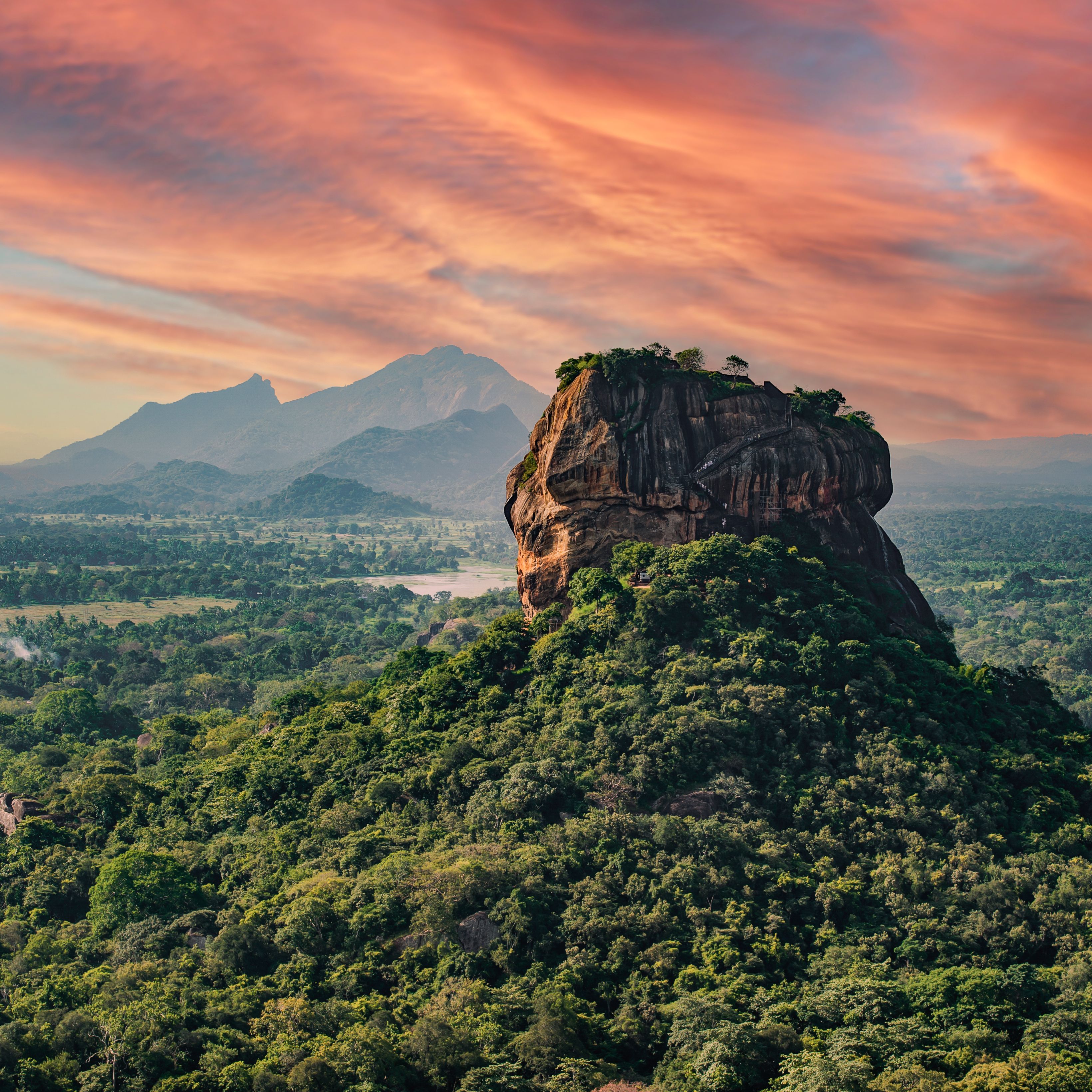
Sigiriya is the site that justifies the journey. The rock fortress, built by King Kashyapa in the fifth century, rises 200 metres above the surrounding forest. The ascent passes mirror-wall inscriptions, the famous fresco galleries where celestial maidens look out from the rock face, and, at the summit, the remains of a palace garden that predates most of the world's great designed landscapes.
The cultural triangle also contains Dambulla Cave Temple, a complex of five cave sanctuaries whose painted ceilings and seated Buddha figures represent one of the finest examples of religious art in Asia, and Polonnaruwa, the well-preserved capital of a medieval kingdom whose scale and ambition become more remarkable the longer you walk through its ruins.
Base yourself at the Heritance Kandalama for these days. Designed by Geoffrey Bawa in 1994 and built into the rock face above a reservoir, it remains one of the most extraordinary hotel buildings in Asia. The relationship between structure and landscape is not something you encounter often: the building grows from the rock and dissolves into the surrounding jungle in a way that continues to delight even on repeated visits.
Days Six and Seven: Kandy
The drive from the cultural triangle to Kandy takes around two hours and passes through increasingly green, increasingly hilly terrain. Kandy sits in a natural bowl of hills surrounding an artificial lake, and its position gives it a different quality of light and air from the lowlands.
The Temple of the Tooth Relic is the city's defining site: the sacred tooth of the Buddha is housed here, and the evening puja ceremony, accompanied by drums and traditional music, is one of the most atmospheric religious observances in South Asia. Arrive early to secure a good position and stay through the ceremony rather than treating it as a brief stop.
The Royal Botanic Gardens at Peradeniya, a few kilometres outside the city, are among the finest in Asia. The avenue of royal palms and the orchid house are highlights, but the gardens reward a full two or three hours of wandering rather than a brisk circuit.
Days Eight, Nine and Ten: Tea Country
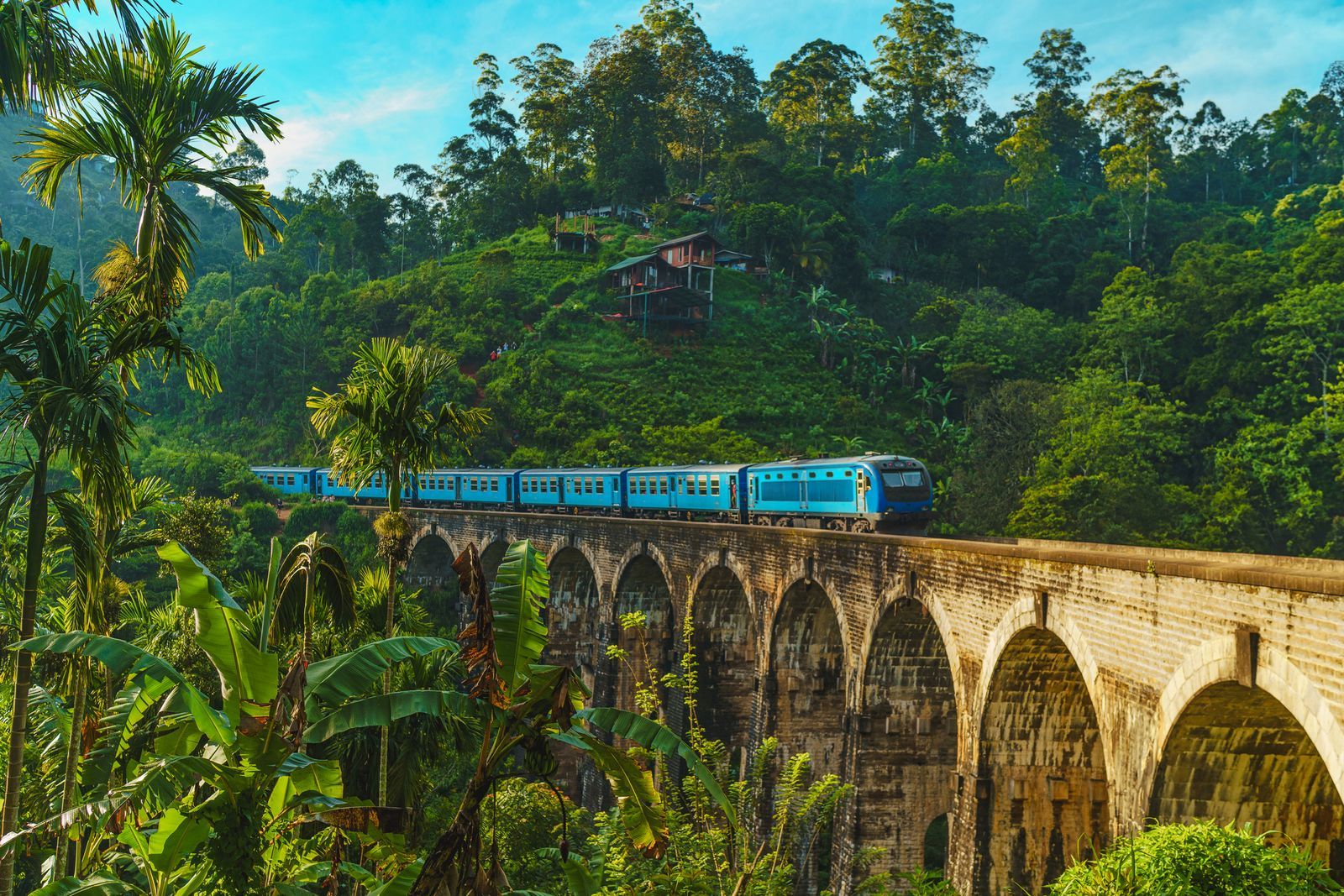
The train from Kandy to Ella is the journey that most visitors remember above all others in Sri Lanka. The line climbs through tea country whose beauty is almost theatrical: steep green slopes, mist in the valleys, small stations where vendors board the carriages with tea and snacks. Book the observation car seats on the Kandy-Badulla line well in advance.
Ella itself is a small hill town that has become somewhat overrun with a certain kind of traveller, but its surroundings are lovely: Little Adam's Peak is a short walk that delivers disproportionate views, and the Nine Arch Bridge, a colonial-era railway viaduct that curves through the tea landscape, is as photogenic as its reputation suggests.
Nuwara Eliya, further west, is the high-altitude centrepiece of tea country. The town has an unlikely English character, a legacy of the colonial planters who built racecourses and golf clubs in the hills above the tea gardens. The Grand Hotel and the Hill Club are period pieces worth at least a meal for the atmosphere.
For accommodation in tea country, the Heritance Tea Factory at Kandapola, a former tea factory converted into a hotel with views across the plantation landscape, delivers exactly what the name promises.
Days Eleven, Twelve, Thirteen and Fourteen: The South Coast
The descent from the hills to the southern coast takes around three hours and delivers you into a completely different Sri Lanka: warmer, more languid, defined by the Indian Ocean and the particular atmosphere of the Galle-to-Tangalle corridor.
Galle Fort is the first stop, and it deserves more than the half-day that many itineraries allocate. The Dutch colonial fortifications enclose a town of remarkable coherence: churches, mosques, mansions and boutiques coexist within the walls in a way that feels organic rather than curated. Walk the ramparts at sunrise or sunset for the best light and the fewest fellow visitors.
The fort has excellent hotels within its walls. Amangalla, the Aman property inside the fort, occupies a 17th-century building and delivers a calibre of service that makes it difficult to leave. The Dutch House is a smaller, more intimate alternative whose character is equally strong.
The road east from Galle to Tangalle follows the coast past Mirissa, where between November and April whale-watching boats go out in search of blue whales and sperm whales with reliable success, and past Weligama, where the surf schools and the gentler waves attract a younger crowd. The serious luxury destination on this coast is the stretch between Weligama and Tangalle, where a cluster of exceptional properties, Cape Weligama and Amanwella among them, offer the combination of Indian Ocean frontage and genuine design ambition that the south coast does better than anywhere else in Sri Lanka.
Reserve three or four nights here, resist the urge to fill the days with activities, and let the coast do what it does best.
If you would like Bluebird to design a Sri Lanka journey that follows this route, or builds something around your specific interests and travel dates, the conversation starts with a single message. Our Sri Lanka specialists know this land extensively and bring that knowledge to bear on every itinerary
When to Visit?
| Season | Months | Conditions & Highlights |
|---|---|---|
| November to April | Peak Season | The preferred season for the west and south coasts, Colombo, the cultural triangle and the tea country. Clear skies, warm temperatures, and the most reliable beach conditions on the southern shore. This is peak season; book well in advance |
| May to September | East Coast Season | The east coast, including Trincomalee and Pasikudah, comes into its own during these months. The southwest experiences its monsoon during this period, but the cultural triangle remains largely accessible throughout. Rates on the west coast are lower and the popular sites are less crowded. |
| October | Shoulder Season | October is a transitional month and can be unpredictable. By late October and early November, the south coast begins to settle into its best season. These weeks can be a good window for experienced travellers who are flexible about weather. |
Where to Stay
Bluebird's Recommended Luxury Properties
- Galle Face Hotel The classic colonial grande dame in Colombo.
- Shangri-La Colombo Modern luxury hotel option.
- The Kingsbury Strong contemporary alternative.
- Heritance Kandalama Geoffrey Bawa-designed architectural masterpiece.
- Heritance Tea Factory Converted tea factory with plantation views.
- Amangalla Luxury heritage hotel inside Galle Fort.
- Cape Weligama Clifftop villas overlooking the ocean.
- Amanwella Private bay luxury retreat.

