
Can you visit Nepal without trekking?
Absolutely. Nepal's most celebrated experiences, including the Everest scenic flight, the UNESCO heritage sites of Kathmandu Valley, wildlife safaris in Chitwan, and the lake district around Pokhara, require nothing more demanding than a short walk. The trekking routes are magnificent, but they represent one dimension of a country that has many others.
The assumption that Nepal means trekking has kept a significant number of potential visitors away from one of the most extraordinary countries in the world. It is an understandable assumption: the image of Everest Base Camp, the Annapurna Circuit, the high passes and the teahouses has been so thoroughly established in the public imagination that other ways of experiencing Nepal have been effectively invisible.
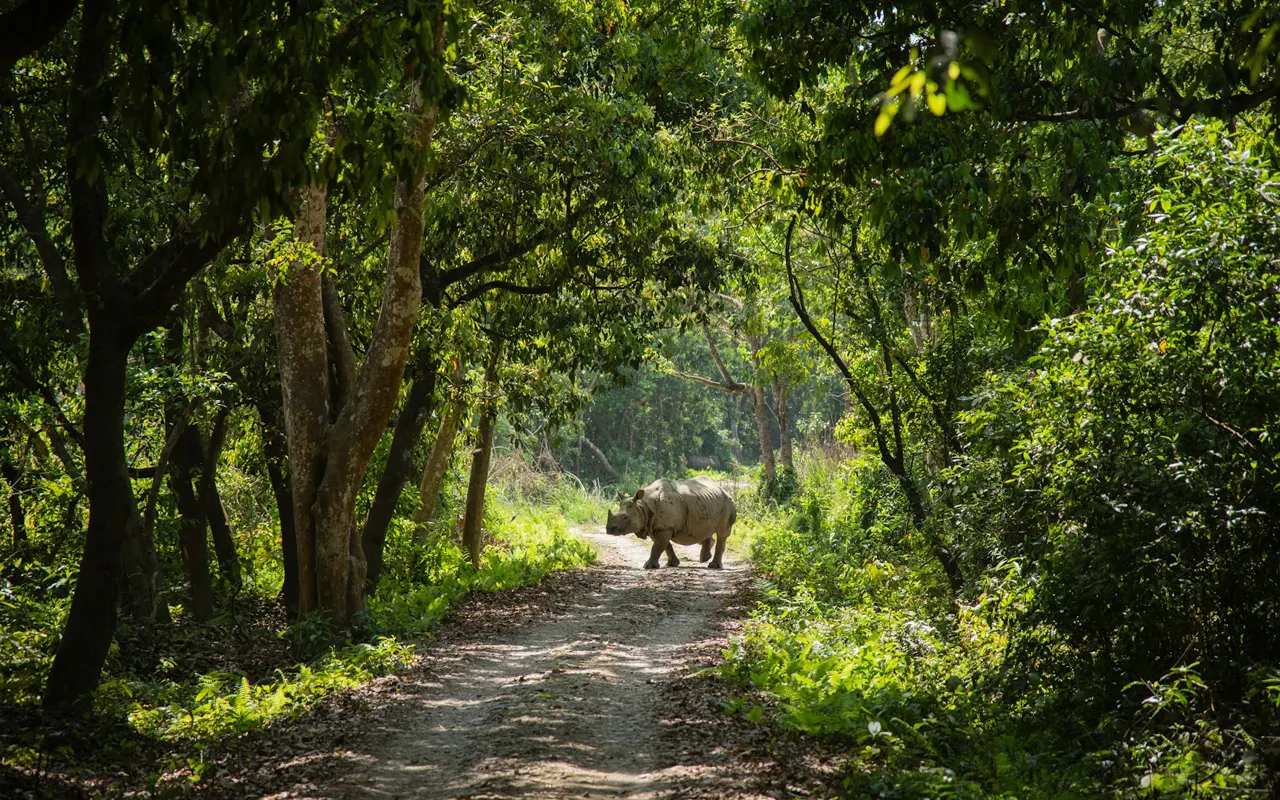
That invisibility is undeserved. Nepal's cultural heritage is among the richest in Asia. Its wildlife is genuinely impressive. Its mountain scenery, accessible to anyone who can board a small aircraft, is simply without parallel. And its luxury hotel infrastructure, particularly in Kathmandu and Pokhara, has developed quietly over the past decade into something that genuinely warrants attention.
This is Nepal for the traveller who wants mountains, culture, wildlife and comfort, in whatever proportion suits them.
Kathmandu: A City That Requires More Than a Day
The standard itinerary gives Kathmandu two days before dispatching the traveller toward a trek. That is not enough. The Kathmandu Valley contains seven UNESCO World Heritage Sites, distributed across the valley floor and the surrounding hills, and each one rewards more attention than a hurried morning visit allows.
The Boudhanath Stupa is the spiritual anchor of the valley and one of the largest stupas in Asia. The square surrounding it is a functioning centre of Tibetan Buddhist life: monks circumambulate at dawn and dusk, pilgrims from across the Himalayan region gather here, and the prayer wheels that line the stupa's base carry the accumulated devotion of centuries. Arrive early, before the tourist groups, and give yourself an hour to absorb the atmosphere.
Pashupatinath Temple, on the banks of the Bagmati River, is Hinduism's holiest site in Nepal and one of the most sacred Shiva temples in the world. The ghats along the river are where cremations take place openly, a practice that confronts visitors with questions about mortality that few other travel experiences raise so directly. A knowledgeable guide is essential here, both for context and for navigation.
The valley towns of Bhaktapur and Patan each justify a half-day visit. Bhaktapur, 13 kilometres east of Kathmandu, is the best-preserved medieval city in Nepal and its Durbar Square gives a sense of what the entire valley must have looked like before the 20th century intervened. Patan's metalwork tradition, visible in the workshops that line its older streets, is one of the finest craft inheritances in Asia.
The Everest Scenic Flight: Mountains Without the Effort
The most direct answer to "I want to see Everest but I don't trek" is the mountain flight that operates daily from Kathmandu's Tribhuvan Airport.
The aircraft, typically a small twin-engine plane with window seats allocated to every passenger, flies east along the Himalayan chain and turns over the Solukhumbu region before returning to Kathmandu. The entire flight lasts about an hour. In that hour, the passenger sees Everest, Lhotse, Makalu, Cho Oyu and dozens of lesser peaks arranged across the northern horizon in a panorama that is simply not replicable from the ground.
The flight operates best in October and November and again in March and April when post-monsoon and spring clarity delivers optimal visibility. Early morning flights are strongly preferred: cloud builds across the Himalayan valleys through the day, and the window for clear mountain viewing typically closes by mid-morning.
Helicopter flights to Everest Base Camp are available for those who want something more immersive. These typically involve a flight over the Khumbu Icefall, a landing at the 5,364-metre base camp, and sufficient time to absorb the scale of the Khumbu Glacier before returning. No acclimatisation is required for a brief landing at this altitude, though some light-headedness is
normal. The helicopter experience delivers a connection to the mountain that the scenic flight cannot replicate, and for many travellers it becomes the defining memory of a Nepal journey.
Pokhara: The Lake District at the Foot of the Annapurna Range
Pokhara sits at 820 metres above sea level, roughly 200 kilometres west of Kathmandu, and its combination of lake scenery, mountain backdrop and unhurried atmosphere makes it the most pleasant city in Nepal for a stay of several days.
The Phewa Lake, reflecting the peaks of the Annapurna range on clear mornings, is the image that defines Pokhara in the popular imagination. It earns that status. A morning on the lake, paddling toward the small Tal Barahi Temple on its island, is one of those quietly perfect travel experiences that require no activity beyond being present.
The Sarangkot viewpoint above the city delivers sunrise views of the Annapurna chain, including Machapuchare, the fish-tail peak that is considered sacred and has never been climbed. The road to the viewpoint is accessible by vehicle; the walk from the trailhead takes about 40 minutes for those who prefer to arrive on foot. Neither route requires trekking fitness.
The World Peace Pagoda, a Japanese-funded stupa on a ridge above the southern shore of Phewa Lake, offers different views across the city and the mountains. The walk from the lake takes around an hour, with most of the ascent on stone steps through forest.
Chitwan: Wildlife Without Compromise
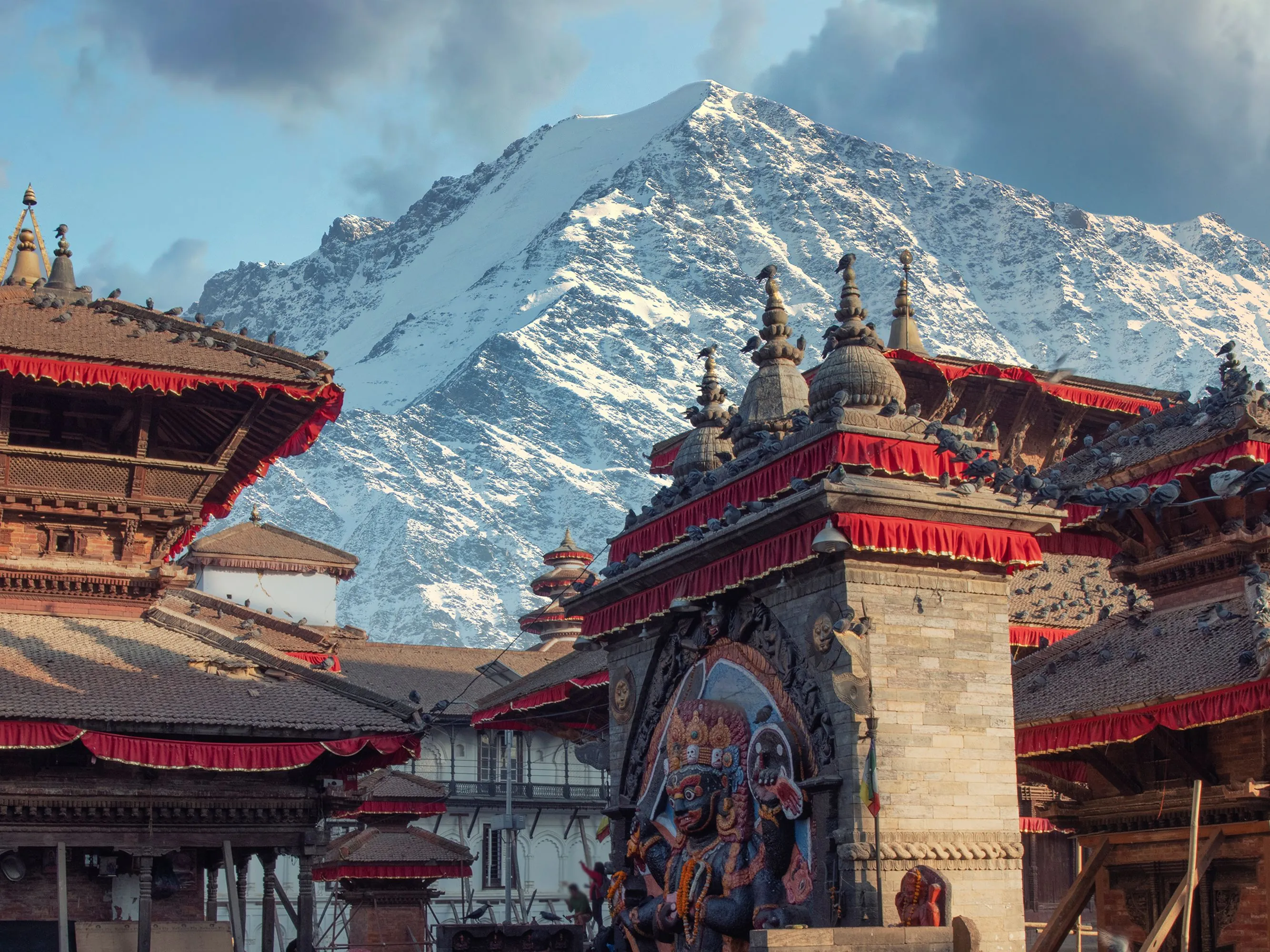
Chitwan National Park in Nepal's lowland Terai region is the country's most important wildlife sanctuary and the home of the one-horned rhinoceros, one of conservation's genuine success stories. From a population of fewer than 100 animals in the 1960s, the Chitwan rhino population now numbers over 700, and sightings in the park are reliable.
Chitwan also supports populations of Bengal tigers, leopards, wild elephants, sloth bears, gavials and marsh mugger crocodiles, making it one of the more complete wildlife destinations in South Asia. The birdlife is exceptional: over 500 species have been recorded in the park, and for serious birders, Chitwan represents a destination in its own right.
Game viewing takes place by jeep, on foot with armed naturalists, and by traditional dugout canoe on the Rapti River. The canoe excursions are particularly atmospheric: floating in silence past gharials basking on the banks and kingfishers working the river margins delivers a very different quality of wildlife encounter from the standard jeep drive.
Lumbini: A Pilgrimage Site That Transcends Religion
Lumbini, in Nepal's far west, is the birthplace of the Buddha and one of the most sacred sites in Buddhism. The Maya Devi Temple marks the precise spot of his birth, and the surrounding sacred garden contains the Ashoka Pillar, erected by the emperor Ashoka in 249 BCE, one of the oldest precisely dated monuments in the subcontinent.
The peace zone surrounding the temple has been developed according to a Kenzo Tange master plan, with monasteries built by Buddhist communities from across the world arranged along a central canal. The contrast between these national monasteries, each built in a different architectural tradition, from Thai to Japanese to Chinese to Tibetan, makes the site more architecturally interesting than many visitors expect.
Lumbini works well as a short excursion from Chitwan, by road or charter flight, and adds a dimension of cultural weight to a Nepal itinerary that focuses primarily on wildlife and scenery.
The country, as any Bluebird traveller who has visited will tell you, has a quality that is difficult to define precisely. Something about its scale, its juxtaposition of the ancient and the Himalayan, and its people, who are among the most genuinely warm in the region, produces a response in visitors that goes beyond the sum of individual experiences. Nepal changes things, quietly. You do not need to walk to a base camp to feel it.
If you are considering Nepal and want to understand what a properly curated non-trekking itinerary looks like, speak with the Bluebird team. We design Nepal journeys for travellers of all interests and mobility levels, and we know the properties and experiences that deliver consistently.
Where to Stay: Bluebird's Recommended Properties
Dwarika's Hotel, Kathmandu
A living museum of Newari architecture set around a series of courtyards. One of the most culturally distinctive hotels in Asia, and the most atmospheric place to base a Kathmandu stay.
Hyatt Regency Kathmandu
Set within the grounds of the Boudhanath area, with views over the Himalayan foothills on clear days. The most comfortable large-format hotel in Kathmandu, with excellent service and strong dining options.
Tiger Tops Tharu Lodge, Chitwan
The original Nepal wildlife lodge, with decades of experience in managing exceptional safari experiences in Chitwan National Park.
Temple Tree Resort, Pokhara
Beautifully positioned on the Phewa Lake shore, with views of the Annapurna range. The most serene and stylish option in Pokhara for non-trekking travellers.
When to Visit?
| Season | Months | Conditions & Highlights |
|---|---|---|
| October to December | Peak Season | The finest season for mountain views and cultural travel. |
| March to May | Spring | Rhododendron blooms and clear Himalayan views. |
| December to February | Winter | Cooler but clear conditions with fewer visitors. |
| July to September | Monsoon | Heavy rainfall and limited mountain visibility. |
Where to Stay
Bluebird's Recommended Luxury Properties
- Dwarika's Hotel, KathmanduA living museum of Newari architecture.
- Hyatt Regency KathmanduComfortable luxury hotel with Himalayan views.
- Tiger Tops Tharu Lodge, ChitwanHistoric wildlife lodge with exceptional safaris.
- Temple Tree Resort, PokharaStylish lakeside property with mountain views.

