
Can you combine India, Bhutan and Nepal in one trip?
Yes, and it is one of the most satisfying multi-country journeys available to the international traveller. The three countries sit within the same geographic region and share well-established flight connections. A journey of 18 to 22 days allows enough time to do each country genuine justice without the pace becoming relentless. The contrast between India's complexity, Nepal's Himalayan grandeur and Bhutan's deliberate serenity makes each country more vivid when experienced in sequence.
There is a version of this journey that most people never consider because the logistics seem daunting. Three countries, multiple flights, a visa for Bhutan that must be arranged in advance, an SDF fee structure that requires planning: the administrative layer can make it feel more complicated than it is.
It is not, in fact, complicated. It is ambitious, which is a different thing. And the reward for that ambition is a journey that covers more genuine ground, culturally and geographically, than almost any other itinerary available to the modern traveller.
The three countries at the heart of this journey could not be more different from one another. India is overwhelming, ancient and modern simultaneously, a country that holds contradictions with extraordinary ease. Nepal is vertical, Himalayan, devout in a way that the mountain landscape seems to necessitate. Bhutan is restrained, deliberate, a kingdom that has decided to measure its progress differently from the rest of the world. Experienced in sequence, each country throws the others into sharper relief. India's noise makes Bhutan's silence more profound. Bhutan's containment makes India's scale more vivid. Nepal, somewhere between the two, sits in the Himalayas watching both.
The Sequence That Works
The order of countries matters, and the sequence that works most consistently is India first, Nepal second, Bhutan last.
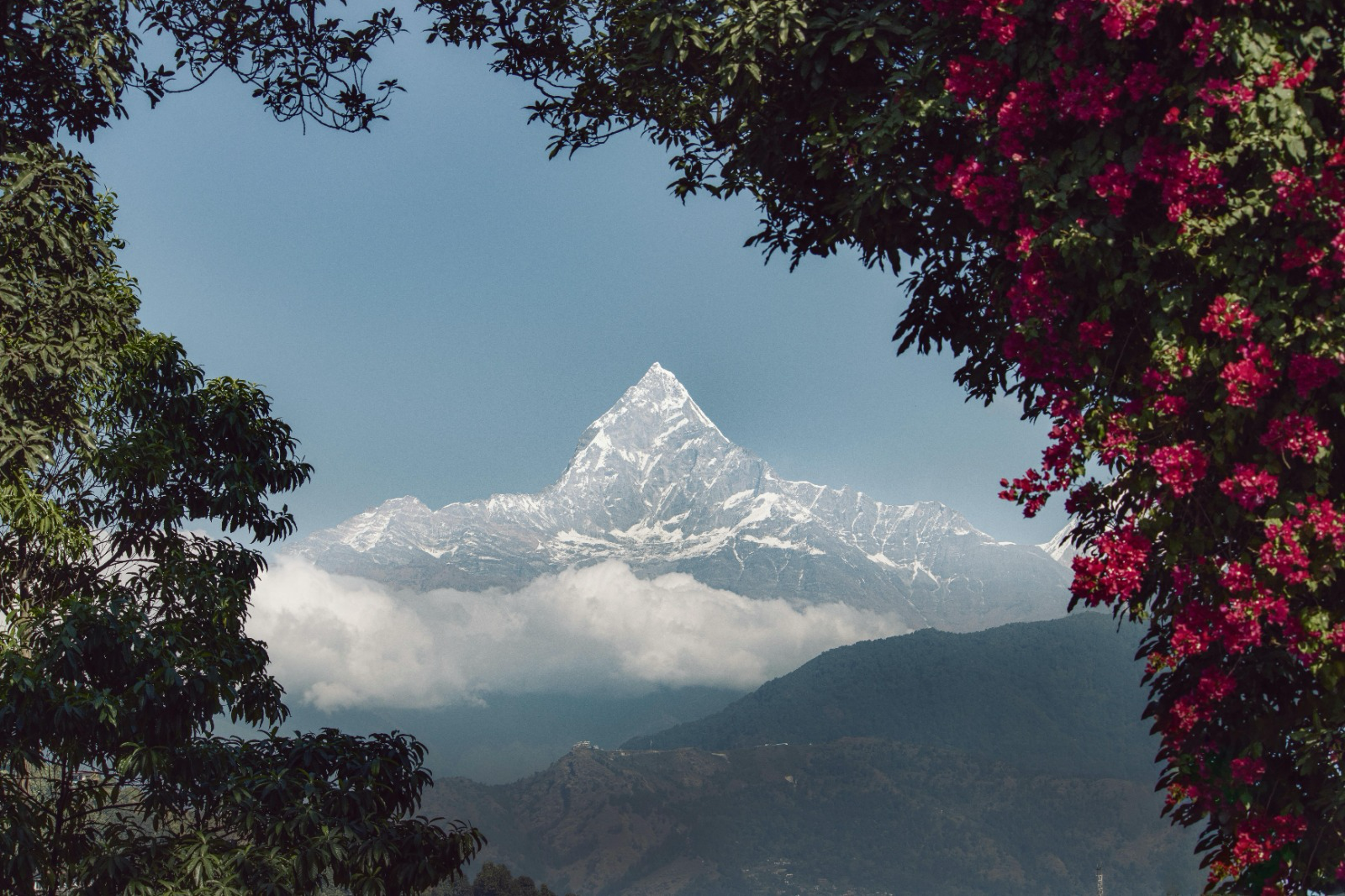
Nepal provides the natural midpoint. The Kathmandu Valley, with its medieval cities and its extraordinary spiritual density, sustains the cultural conversation that India begins. The mountain scenery, whether experienced through the Everest scenic flight or from the shores of Phewa Lake in Pokhara, introduces the Himalayan dimension that Bhutan will later deepen.
Bhutan closes the journey. Its slowness and serenity work best when the traveller has already been saturated by India and Nepal and is ready for a different register. The monasteries and the forested valleys and the quality of silence that settles over the country at dusk are received differently by someone who has spent two weeks in motion. Bhutan rewards a traveller who is ready to slow down, and the end of a long journey is the best time to be that traveller.
India opens the journey. It is the most immediately engaging, the most kinetic, the country that asks the most of the traveller's attention. Starting there means the journey begins with full energy and works with India rather than against it.
The India Chapter: Five to Six Days
Delhi deserves two nights. The city holds more history per square kilometre than almost anywhere on earth, and the tendency to treat it as a single-day transit point is a consistent mistake. Humayun's Tomb, the precursor to the Taj Mahal and the building that established the Mughal architectural tradition in India, is less visited than it deserves. The Qutub Minar, rising from the ruins of Delhi's earliest settlement, rewards a full morning. Old Delhi, with Jama Masjid and the Chandni Chowk bazaars, is a different country from the boulevards and embassies of New Delhi, and the contrast between the two cities within a city is itself a kind of education.
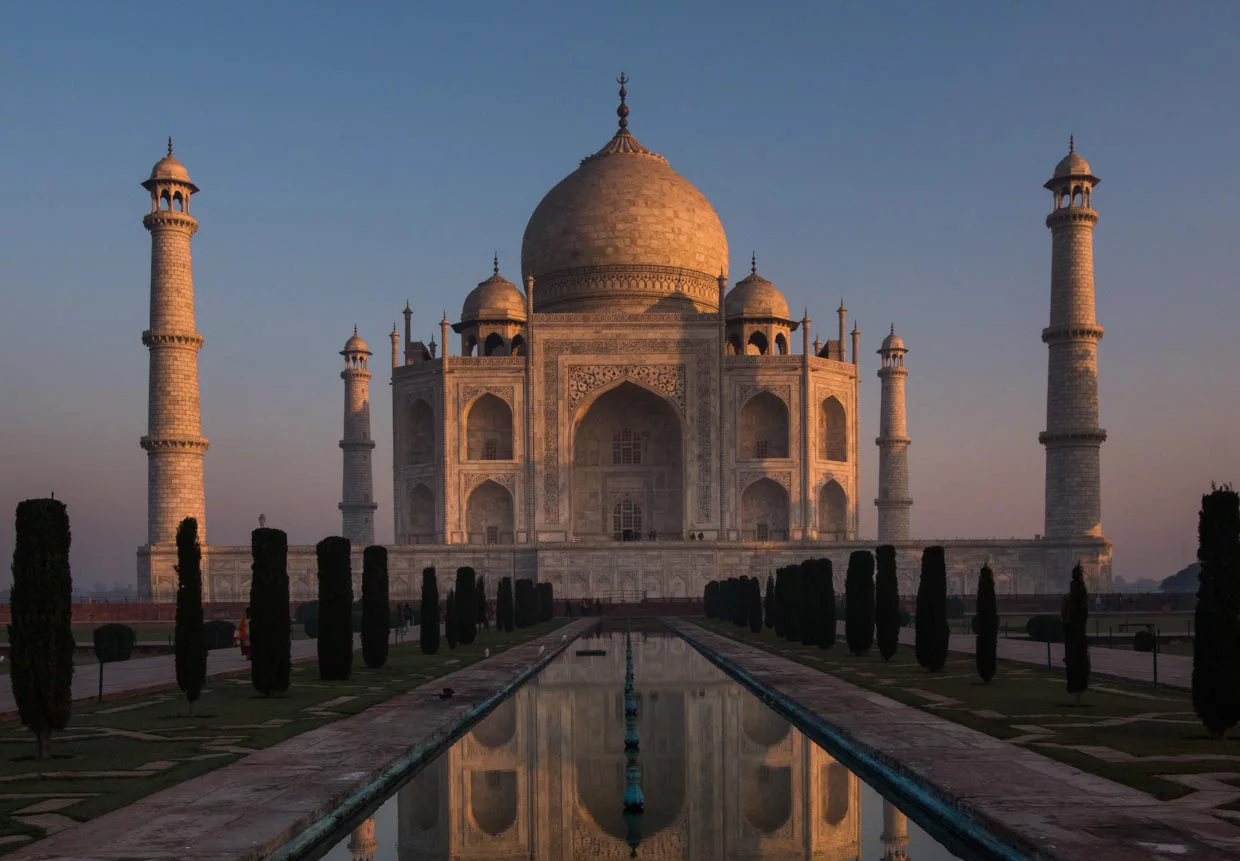
Agra needs one night, which means an early morning at the Taj Mahal before the crowds arrive and a thoughtful afternoon at Agra Fort and Fatehpur Sikri. The Oberoi Amarvilas, with its rooms oriented toward the Taj Mahal, is the one hotel in Agra whose position genuinely justifies the expense.
Jaipur earns two nights. The Amber Fort, the City Palace, the Jantar Mantar observatory and the pink-washed streets of the old city deliver a concentrated version of Rajasthan's best qualities. A morning at the bazaars before the heat builds, and dinner on a hotel terrace with the fort lit up across the hill: Jaipur works beautifully for travellers who have not been to Rajasthan before.
For those who have already done the Golden Triangle, the India chapter can be redirected toward South India, Kerala, or a Central India tiger safari circuit. The logic of the three-country journey holds regardless of which Indian region is chosen.
The Nepal Chapter: Four to Five Days
The flight from Delhi to Kathmandu takes just under two hours and lands you in a city that is both familiar and completely foreign after India: quieter, more intimate, with a different quality of devotional life visible on every street corner.
Kathmandu warrants two full days. Boudhanath Stupa in the early morning, Pashupatinath Temple in the late afternoon, Bhaktapur medieval city the following day, with the Patan Museum for its extraordinary collection of religious art. The city holds its history in plain sight in a way that India's major cities, buried under centuries of additional layers, often cannot.
The Everest scenic flight operates from Kathmandu and should be scheduled for one of the Kathmandu mornings rather than treated as an optional extra. Seeing Everest from the air, alongside the entire eastern Himalayan chain spread across the horizon, is one of the most arresting experiences the journey offers.
Pokhara, reached by a 25-minute flight or a five-hour drive from Kathmandu, provides the Nepal chapter's second act. Two nights is the ideal allocation: enough time for an early morning at the Sarangkot viewpoint for sunrise over the Annapurna range, an afternoon on Phewa Lake, and a morning exploring the town and its surroundings before the flight to Paro.
For those with a fifth day to allocate, the addition of Chitwan National Park for an overnight wildlife stay adds a dimension that the culture and mountain scenery of Kathmandu and Pokhara cannot provide.
The Bhutan Chapter: Eight to Nine Days
The flight from Kathmandu to Paro is extraordinary in itself. The aircraft descends through the Himalayan chain, and on clear days the peaks are visible through the cabin windows at an uncomfortably close distance. The landing at Paro, threading through valleys that seem to leave no room for a runway, is a theatrical arrival that sets the tone for everything that follows.
Bhutan is described in more detail elsewhere in our blogs, but the core of a Bhutan chapter within a three-country journey should include Paro, Thimphu, Punakha and Gangtey, with the Tiger's Nest hike as the defining physical experience and the Punakha Dzong as the defining cultural one.
The temptation, after India and Nepal, is to try to move through Bhutan at the same pace. Resist it. The country operates on a different rhythm, and the traveller who tries to replicate an India itinerary's momentum in Bhutan misses what the country is actually offering. Bhutan asks for attention and slowness in return for something that is difficult to define and harder to find elsewhere.
Practical Notes for the Three-Country Journey
Visas and Entry. Indian e-visas are straightforward and available online. Nepali visas are issued on arrival at Kathmandu airport. Bhutan visas must be arranged in advance: independent travel is not permitted, and all visits must be booked through an approved agent. Bluebird handles all visa arrangements as part of the planning process.
Domestic and Regional Flights: The flight connections within this journey, Jaipur to Kathmandu, Kathmandu or Pokhara to Paro, are well-established and operate reliably. Paro to Phuentsholing and onward to India is also an option for those who want to re-enter India at the journey's end. All flights should be booked as far in advance as possible, particularly the Paro flights, which have limited capacity.
Health and Altitude: The altitude gradient across this journey is significant. Delhi sits at roughly 200 metres. Kathmandu is at 1,400 metres. Thimphu is at 2,300 metres, and Paro at 2,200 metres. Some light acclimatisation is advisable in both Nepal and Bhutan, particularly for travellers who have not spent time above 2,000 metres before. Pacing the first afternoon in both Kathmandu and Thimphu prevents the kind of headache that can otherwise arrive uninvited.
How Bluebird Approaches This Journey: A three-country itinerary of this scope benefits enormously from a single point of planning. Coordinating hotels, visa arrangements, domestic flights, guides and ground transfers across three countries with different regulatory frameworks is exactly the kind of work that a specialist makes invisible. The traveller simply arrives, and the journey unfolds.
If this is the kind of journey you are considering, the Bluebird team would welcome the conversation.
Where to Go ?
India: The Golden Triangle
Delhi, Agra and Jaipur form the most logical starting point for a three-country journey. The Taj Mahal, the forts of Rajasthan and the Mughal monuments of Delhi provide an immediate introduction to India's historical depth. From Jaipur, a direct flight to Kathmandu takes under three hours.
Nepal: Kathmandu and Pokhara
Kathmandu's UNESCO heritage sites, the Everest scenic flight and the lake-and-mountain setting of Pokhara form the core of a well-structured Nepal chapter. Chitwan National Park can be added for wildlife, typically as a short excursion from Kathmandu or Pokhara.
Bhutan: The Main Valley Circuit
Paro, Thimphu, Punakha and Gangtey form the classic Bhutan itinerary. Bumthang can be added on longer journeys. The country is best kept for the final chapter of the trip: its serenity and slowness work best when the traveller has already been moved and surprised by India and Nepal.
Where to Stay: Bluebird's Recommended Properties
The Leela Palace, New Delhi
An outstanding base for the India leg: central, beautifully designed and with a standard of service that sets the right tone for the journey ahead.
Oberoi Amarvilas, Agra
Every room faces the Taj Mahal. The finest hotel in Agra by a considerable distance, and the logical anchor for a night in the city
Oberoi Rajvilas, Jaipur
Set on 32 acres outside the city, with the architecture and gardens of a Rajput retreat. One of the Oberoi group's best properties.
Dwarika's Hotel, Kathmandu
The most culturally distinctive hotel in Kathmandu. Built around authentic Newari architecture across multiple courtyards, it brings the city's heritage to life.
Pavilions Himalayas, Pokhara
Private eco-villas in the hills above Pokhara with extraordinary Annapurna views. A genuinely beautiful property in a genuinely beautiful position.
Where to Stay
Bluebird's Recommended Luxury Properties
- The Leela Palace, New DelhiAn outstanding base for the India leg with exceptional service.
- Oberoi Amarvilas, AgraEvery room faces the Taj Mahal.
- Oberoi Rajvilas, JaipurA refined retreat set on expansive grounds.
- Dwarika's Hotel, KathmanduA culturally rich property built around traditional Newari architecture.
- Pavilions Himalayas, PokharaEco-luxury villas with Annapurna views.

