
What is the Golden Triangle in India?
The Golden Triangle is a travel circuit connecting three cities in northern India: Delhi, Agra and Jaipur. Together they form India's most visited tourist route and the starting point for the majority of first-time visitors from the UK.
There is a version of the Golden Triangle that gets done badly, and a version that leaves people wondering why it took them so long to come to India. The difference between the two is not the cities themselves. Delhi, Agra and Jaipur are magnificent in ways that no amount of tourist infrastructure has managed to diminish. The difference is in the pace, the guide, the hotels, and the degree to which the journey was built for the person taking it or assembled as efficiently as possible for the largest number of people simultaneously. This is an honest account of what the Golden Triangle is, what it delivers, where it falls short, and how to approach it in a way that puts it firmly in the first category.
Why This Circuit Exists ?
The three cities that form the Golden Triangle are not grouped together arbitrarily. They sit within a manageable triangle of distance in northern India, each one connected to the others by good roads and direct flights. More importantly, they represent three distinct registers of Indian history and culture that together form a narrative arc of unusual coherence. Delhi is the city of empires, a place where layer upon layer of ruling dynasties have left their architectural signature across a landscape of extraordinary density. The Mughal monuments of Old Delhi, the colonial geometry of Lutyens' New Delhi, the Hindu and Islamic remains that predate both: Delhi holds all of these simultaneously and makes sense of none of them individually. It requires time and a guide who can give it structure. Agra is a single-purpose city in the best possible sense. It exists, for the traveller, because of the Taj Mahal, and the Taj Mahal is genuinely worth existing for. There are few monuments on earth that fully justify their reputation; this is one of them. But Agra offers more than the single sight it is credited with: Agra Fort and the ghost city of Fatehpur Sikri both warrant unhurried attention. Jaipur is Rajasthan's introduction and its most accessible expression. The pink-washed facades of the old city, the Amber Fort rising above the lake outside the city, the bazaars that sell everything from Rajasthani miniature paintings to block-printed textiles: Jaipur is simultaneously a living city and a monument to the Rajput tradition that built it. It is also, for many travellers, the moment when India shifts from overwhelming to genuinely beloved.
Delhi: Two Nights, at Minimum ?
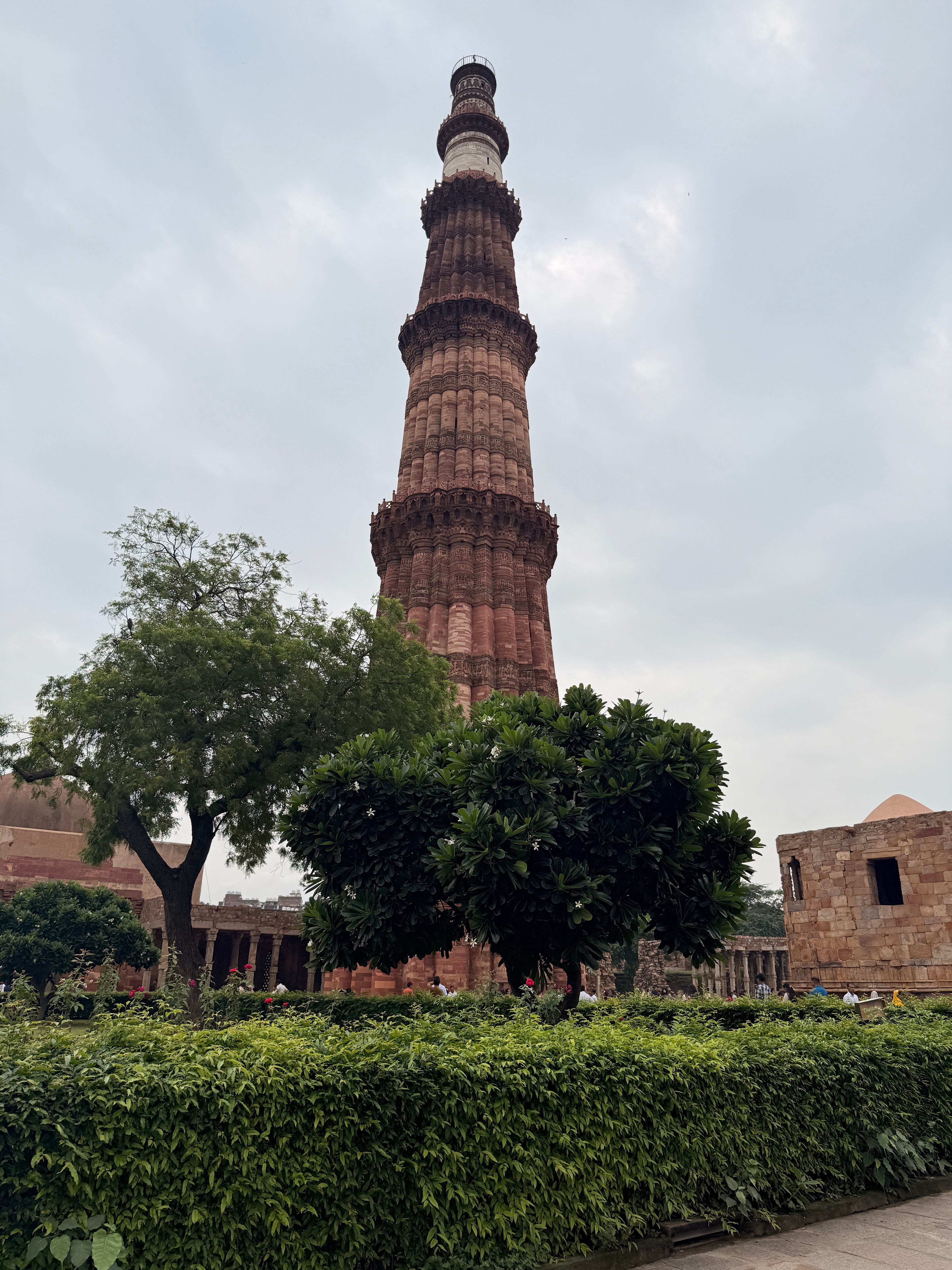
The mistake most first-time visitors make in Delhi is treating it as the beginning of the Golden Triangle rather than as a destination in its own right. Two nights is the minimum. Three is better. Old Delhi and New Delhi are, in a meaningful sense, two different cities that happen to occupy the same geographical space. Old Delhi, the walled city built by the Mughal emperor Shah Jahan in the 17th century, is dense, ancient and kinetic in a way that no amount of preparation fully equips the first-time visitor for. The lanes of Chandni Chowk, the courtyard of Jama Masjid, the spice market of Khari Baoli: these are places that reward being moved through slowly and with guidance rather than navigated independently at pace. New Delhi, built by the British at the beginning of the 20th century and completed in 1931, is an entirely different proposition: broad boulevards, Lutyens' bungalows behind their garden walls, India Gate at the end of Rajpath, and the government buildings that still carry the imperial self- confidence of their era. The National Museum on Janpath is one of the finest repositories of Indian art and artefact in the country and deserves a proper morning. The monuments that most reward time in Delhi are Humayun's Tomb and the Qutub Minar complex. Humayun's Tomb, built in 1570 and the acknowledged precursor to the Taj Mahal, has been so thoroughly restored in the past two decades that it now presents its original grandeur with uncommon clarity. Spend a morning here and you arrive in Agra already understanding the architectural tradition that produced the Taj. The Qutub Minar, the 73-metre minaret that rises from the ruins of Delhi's first Muslim city, rewards a full two hours and a guide who can explain what the surrounding ruins represent.
Agra: One Night, Timed Correctly ?
Agra requires one night, not because it lacks things to see but because its primary offering, the Taj Mahal, is best experienced twice: once at dawn and once in the late afternoon light, when the marble shifts between white and gold and the crowds have thinned. The Taj Mahal is the one sight in India that most closely matches its reputation. It was built by the Mughal emperor Shah Jahan as a mausoleum for his wife Mumtaz Mahal, who died in 1631, and completed 21 years later. The marble was quarried in Rajasthan and carried to the site by a thousand elephants. Semi-precious stones sourced from across Asia and the Middle East were inlaid into the marble in the pietra dura technique. The four minarets that frame the central dome are angled slightly outward so that in the event of an earthquake they would fall away from the tomb rather than onto it. None of this context diminishes the experience of standing in front of it. It deepens it. The Oberoi Amarvilas is the hotel in Agra for the simple reason that every room in the property faces the Taj Mahal across the hotel gardens. A sunrise from the room, before the day's visitors have arrived, is an experience that cannot be replicated at any other property in the city. Agra Fort, a 16th-century Mughal fortification from which Shah Jahan could see the Taj Mahal from his room, is the morning after the Taj. Fatehpur Sikri, 40 kilometres west of Agra, is the ghost city that the emperor Akbar built and abandoned within 14 years: an entire Mughal capital, perfectly preserved, standing empty in the Rajasthani landscape.
Jaipur: Two Nights, With Purpose ?
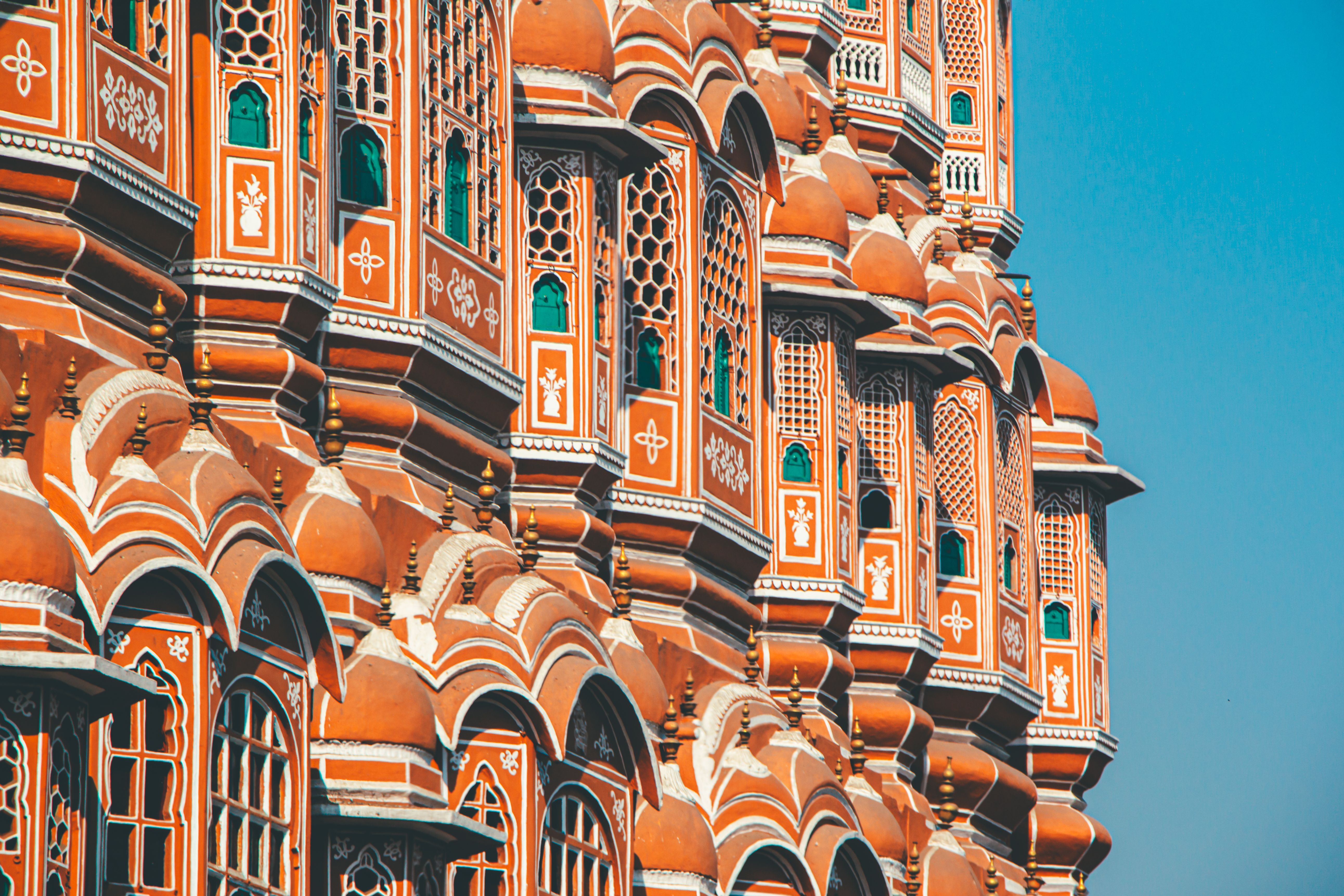
Jaipur was built in 1727 by the Maharaja Jai Singh II, who designed it according to the principles of Vastu Shastra, the ancient Hindu system of architecture. The pink colour that defines the old city was applied to its facades in 1876 to welcome the Prince of Wales, and it stayed. The result is one of the most coherent and photogenic old cities in India. The Amber Fort, 11 kilometres outside the city, is the primary monument and one of the finest examples of Rajput architecture in existence. Built from amber-coloured sandstone and white marble, it rises above a lake whose reflection doubles the impact of the approach. The interior rooms, with their mirror-work and painted ceilings, are extraordinary. A good guide here makes the difference between a tour of rooms and an understanding of the life that was lived in them. Within the city, the City Palace complex houses a museum whose collection of royal artefacts includes two enormous silver vessels that the Maharaja Madho Singh II had filled with Ganges water and carried to London for the coronation of King Edward VII in 1902. The Jantar Mantar, an 18th-century astronomical observatory in the old city, contains the world's largest stone sundial and a collection of instruments that were, and in some cases still are, capable of measuring time, predict eclipses and track celestial bodies with remarkable precision. The bazaars of Jaipur reward unhurried exploration. Johari Bazaar for gems and jewellery, Bapu Bazaar for textiles and block prints, the lanes around the old city for miniature paintings and blue pottery: Jaipur is one of the better shopping cities in India, and the quality of the craft available at the better establishments is genuinely high.
What the Golden Triangle Does Not Cover ?
The Golden Triangle is, by design, a circuit through northern India's most concentrated offering. It does not represent the whole of India, and treating it as such is the most common misunderstanding among first-time visitors. It does not include wildlife. It does not include Kerala or the south. It does not include the more remote pleasures of Rajasthan's desert, the hill forts of Jodhpur and Jaisalmer, or the lakeside romance of Udaipur. It does not include the Himalayas, the backwaters, or the extraordinary temple traditions of Tamil Nadu. What it does include is a concentrated experience of three cities that together represent some of the finest architecture, history and living culture in Asia. For a first visit to India, particularly a visit of seven to ten days, the Golden Triangle is the most efficient and most rewarding way to spend the time available. For a return visit, it becomes the launch point for something more ambitious.
How Long Does the Golden Triangle Take?
The minimum is seven nights: two in Delhi, one in Agra, and two in Jaipur, with travel days built in.
This is a pace that allows a real encounter with each city rather than a cursory pass.
Ten nights is more comfortable and allows for additional depth: a full day at Fatehpur Sikri from
Agra, a morning at the craft villages outside Jaipur, a day trip from Jaipur to Ranthambore for a
tiger safari. Twelve nights makes room for a post-Jaipur extension into deeper Rajasthan, typically
Jodhpur or Udaipur or both.
The travel between cities is typically by road, which takes three to five hours depending on the route
and time of day, or by train. The Shatabdi Express between Delhi and Jaipur is comfortable and
reliable. Private road transfer, with a driver who knows the route, allows for stops along the way and
is the preferred option for travellers who want flexibility.
 If you are planning a first trip to India and want the Golden Triangle done properly, the Bluebird
team would welcome the conversation. We plan this circuit regularly and bring to it the knowledge
of which guides, which hotels and which sequencing make the experience work. Reach out and we
will start with the questions that make the journey your own.
If you are planning a first trip to India and want the Golden Triangle done properly, the Bluebird
team would welcome the conversation. We plan this circuit regularly and bring to it the knowledge
of which guides, which hotels and which sequencing make the experience work. Reach out and we
will start with the questions that make the journey your own.
Where to Stay
Bluebird's Recommended Luxury Properties
- The Leela Palace, New DelhiThe finest hotel in central Delhi, with architecture inspired by the grand Mughal tradition and service that sets the tone for the journey ahead.
- The Oberoi, New DelhiConsistently one of Asia's great city hotels. Contemporary, precise, and positioned near Humayun's Tomb.
- Oberoi Amarvilas, AgraEvery room faces the Taj Mahal.
- The Oberoi Rajvilas, JaipurSet across 32 acres outside the city.
- Samode Haveli, JaipurA 475-year-old haveli in the heart of the old city.

