
Can you visit Bhutan independently without a guide?
No. Bhutan requires most foreign visitors to travel through a licensed Bhutanese tour operator or internationally accredited travel agent working with one.
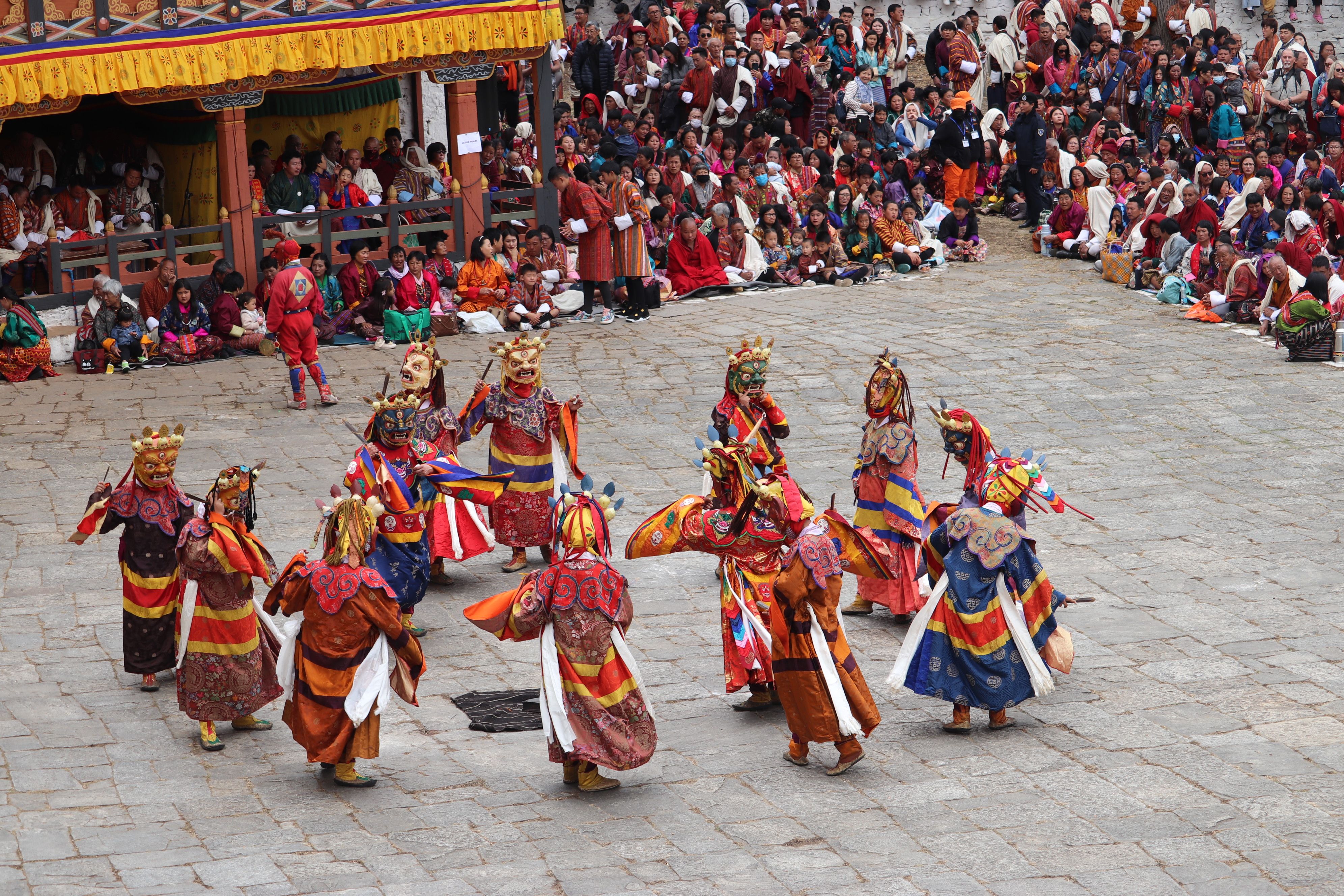
Bhutan is one of a small number of countries in the world where the question of independent travel has a clear, regulatory answer rather than a practical one. You cannot visit Bhutan independently, in the conventional sense, because Bhutan does not permit it. This is not a soft recommendation or a matter of degree. It is policy. Every foreign visitor to Bhutan, with the exception of citizens of three neighbouring countries, must arrive through a pre-arranged itinerary booked through a licensed Bhutanese tour operator or an internationally accredited agent working with one. A licensed guide must accompany the visitor throughout their stay. Accommodation must be pre-booked as part of the package. The Sustainable Development Fee of USD 100 per person per night must be paid in advance. Most travellers, when they first encounter this, feel a flicker of resistance. The instinct to wander freely is a natural one. But understanding why Bhutan has these rules, and what they actually mean in practice, tends to convert that resistance into something closer to appreciation.
Why Bhutan Requires a Guide and Tour Operator ?
The regulation of tourism in Bhutan is an expression of the same philosophy that governs most
aspects of Bhutanese policy: the principle of Gross National Happiness, which holds that national
wellbeing cannot be measured by economic growth alone.
Bhutan made a deliberate decision, decades ago, to pursue a model of tourism that it described as
high-value, low-impact. The logic was straightforward: unrestricted visitor numbers would generate
revenue but would also erode the cultural integrity and natural environment that make Bhutan
worth visiting in the first place. Better to accept fewer visitors who spend more, travel with
guidance, and are supported in engaging with the country meaningfully, than to open the doors to
volume that the country's infrastructure and cultural fabric cannot absorb without damage.
The guide requirement is integral to this model. A licensed Bhutanese guide is not simply a logistics
manager. They are the interface between the visitor and a culture that is both ancient and carefully
maintained. They manage access to religious sites, explain the significance of what is being seen,
ensure that visitors behave appropriately in sacred spaces, and represent a layer of cultural
stewardship that the Bhutanese government considers non-negotiable.
Why does Bhutan require tourists to use a tour operator?
Bhutan's tour operator requirement is part of its high-value, low-impact tourism policy,
designed to control visitor numbers, ensure cultural sensitivity at religious and heritage
sites, and generate revenues that fund public services including free healthcare and
education. The Sustainable Development Fee of USD 100 per person per night, which funds
these services, is collected through the tour operator system. Independent travel would
make this model unworkable. The requirement is also a form of quality control: a licensed
operator is accountable for the behaviour and experience of their guests in ways that an
independent traveller is not.
What This Means in Practice ?
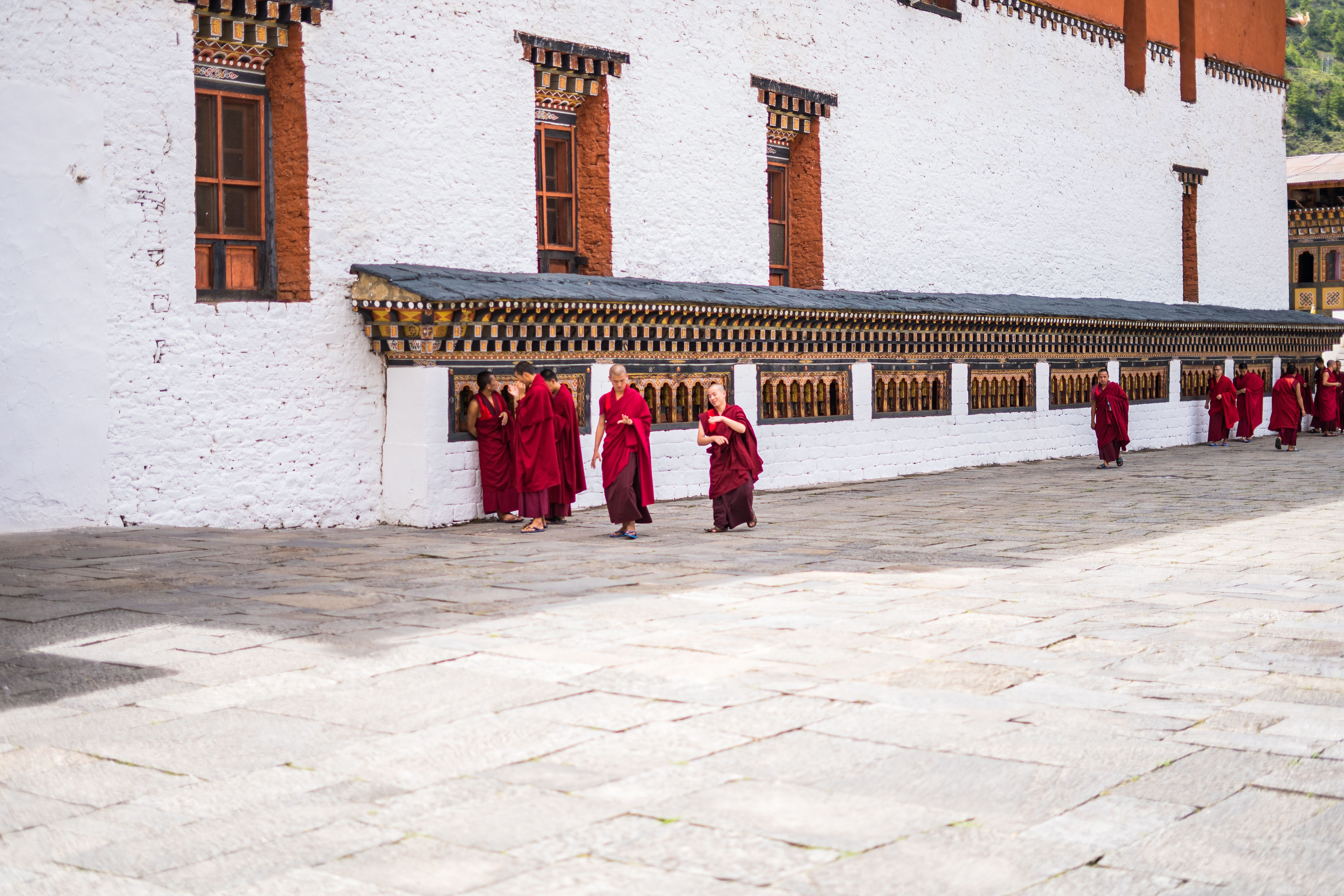
For the traveller, the guide and operator requirement means that a Bhutan journey is planned in advance rather than improvised on arrival. The itinerary, the accommodation, the guide and the transport are all arranged before departure. This is standard practice for any well-organised luxury journey, and for most travellers who approach Bhutan through a specialist, it is simply how the process works. The guide accompanies the group throughout the visit. They are present at monuments, monasteries and dzongs, where their licensed status provides access that no independently travelling visitor could arrange. They are absent during meals and evenings, which remain private time. They are not surveillance; they are a resource. The quality of the guide is the variable that matters most within this framework. Bhutan has a pool of licensed guides whose expertise ranges considerably. Some have deep knowledge of Buddhist iconography, art history and the political history of the kingdom. Others are adequate but unremarkable. The difference between a guide who can explain the iconography of the thangkas in a monastery and one who can identify them without going further is the difference between a cultural encounter and a walk-past. Bluebird specifies guides by name rather than by category. When we design a Bhutan itinerary, the guide recommendation is personal: someone whose knowledge and character we have assessed and whose suitability for the particular client has been considered.
What You Cannot Do in Bhutan ?
Independent exploration of the country is restricted. Visitors cannot hire a vehicle and drive without an approved operator arrangement. They cannot enter restricted areas, including certain dzongs and valleys near the Tibetan border, without the permissions that a licensed operator manages. They cannot arrive and adjust their itinerary spontaneously in the way that travel in less regulated countries allows. This is a real constraint. Travellers who value maximum spontaneity may find it frustrating in moments. The answer is not to pretend the constraint does not exist but to plan an itinerary that builds appropriate flexibility within the structure. A day without fixed activities, an afternoon allocated to wandering a market town without schedule, evenings that belong entirely to the traveller: these can all be designed into a Bhutan itinerary without violating the framework.
Can you change your Bhutan itinerary after arrival?
Within limits, yes. Your licensed guide and tour operator can make adjustments to the daily schedule, accommodate spontaneous requests to linger at a particular site or take a different route, and respond to weather or other circumstances that affect the plan. What cannot be changed after arrival is the overall framework: the accommodation bookings, the registered itinerary and the guide arrangement are fixed before departure. This is why working with an operator who asks the right questions during the planning process, and builds the itinerary thoughtfully rather than formulaically, matters so significantly.
The Sustainable Development Fee: What It Covers ?
The USD 100 per person per night Sustainable Development Fee is separate from accommodation costs, guide fees and transport. It is paid to the Bhutanese government through the tour operator system and funds free education, free healthcare and infrastructure across the kingdom. For a ten-night journey with two people, this amounts to USD 2,000 channelled directly to Bhutanese public services. It is not a tax in the conventional sense; it is a contribution to the model that keeps Bhutan functional and coherent as a society. Understanding it this way, rather than as an added cost, changes how it sits in the overall accounting of a Bhutan journey. The fee structure was revised in 2022, reducing from USD 200 per person per night to the current USD 100. Bhutanese citizens and nationals of India, Bangladesh and the Maldives are exempt.
How to Book a Bhutan Journey Through the Right Channels ?
Bhutan can be booked through a licensed Bhutanese tour operator directly, or through an internationally accredited travel specialist working in partnership with a licensed Bhutanese operator. The latter is typically the preferable route for UK travellers: the international specialist manages the planning conversation in the same time zone, handles the financial protection requirements, and acts as the point of contact before, during and after the journey. Not all international agents who advertise Bhutan journeys have the depth of knowledge the destination requires. Bhutan is a small, specific country with nuances of culture, seasonal variation and site access that reward genuine expertise. The agent who has visited Bhutan, knows the properties from experience, and has relationships with specific guides rather than simply with operator categories will deliver a fundamentally different journey from one working from secondhand information.
Why the Rules Make Bhutan Better ?
The point that most travellers arrive at, after initial resistance to the regulatory framework, is that the rules are what makes Bhutan exceptional. The absence of a budget travel infrastructure means there are no hostels, no tuk-tuks offering unsolicited commentary, no touts at the monastery gates. The management of visitor numbers means the major sites feel spacious even during peak season. The guide requirement means that every visitor has someone with them who is responsible for ensuring the experience is meaningful and culturally respectful. The result is a country that feels, in the 21st century, genuinely itself. The monasteries are maintained by monks rather than tourism revenue. The dzongs serve their administrative and religious functions rather than existing purely as visitor attractions. The valleys have not been developed beyond what the philosophy of the country permits. None of this happens by accident. It is the outcome of a deliberate policy, maintained consistently over decades, and the requirement to visit through a licensed structure is part of what sustains it. The traveller who arrives in Bhutan having accepted this, and having worked with an operator who understands the country rather than simply processing bookings to it, finds a journey unlike anything else available in the world today. If you are considering Bhutan and want to understand what the journey looks like when it is properly planned, the Bluebird team would welcome the conversation. We visit Bhutan regularly, know the guides who make the difference, and bring to every Bhutan itinerary the kind of attention the country deserves.
Where to Stay
Bluebird's Recommended Luxury Properties
- AmankoraFive lodges across five Bhutanese valleys.
- Six Senses BhutanLuxury lodge circuit with strong wellness programming.
- COMO Uma ParoElegant property in the Paro Valley.
- Gangtey LodgeExceptional views over the Phobjikha Valley.
- Zhiwa Ling AscentBhutanese-owned heritage property in Paro.

